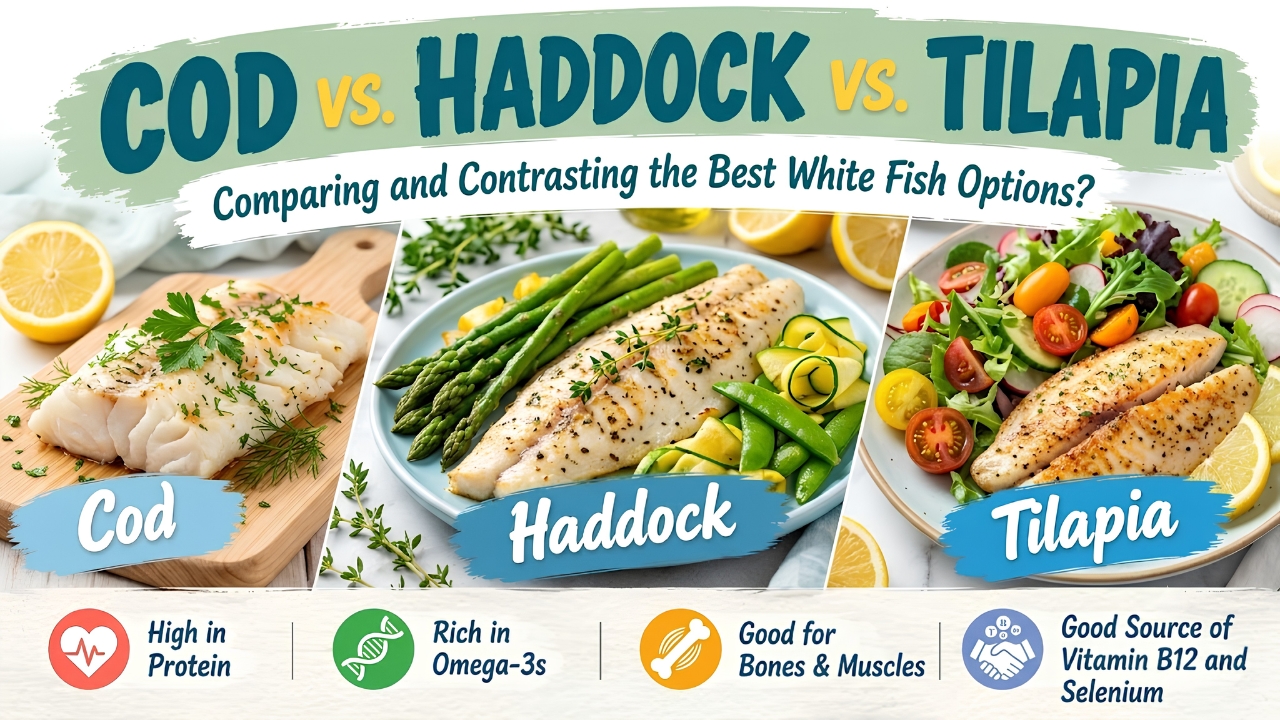
Cod vs. Haddock vs. Tilapia: White fish is a popular choice for people who want to eat healthier without adding too much fat to their meals. Cod, haddock, and tilapia are three widely consumed varieties that offer protein, essential nutrients, and a mild flavor that works well in many recipes. They can be baked, grilled, steamed, or pan-cooked, making them easy to include in everyday meals. However, their nutritional profiles, taste, and natural sources differ slightly. Understanding these differences can help you choose the fish that best fits your dietary needs, whether your goal is building muscle, managing weight, or maintaining a balanced diet.
Cod: A Lean Fish Packed With Protein
Cod is a mild-tasting white fish known for its flaky texture and low fat content. It is an excellent option for people who want a protein-rich meal without consuming too many calories. A 100-gram serving of cooked Atlantic cod typically provides around 20–23 grams of protein, depending on the cooking method and preparation.
Cod also contains vitamin B12, selenium, phosphorus, and other nutrients that support normal body functions. Vitamin B12 plays an important role in nerve function and red blood cell production, while selenium helps protect cells from oxidative damage.
One of the biggest advantages of cod is its versatility. Its delicate flavor pairs well with lemon, garlic, herbs, and light sauces. It works particularly well in baked fish dishes, grilled fillets, and homemade fish tacos.
For people watching their calorie intake, cod can be a practical choice because it delivers substantial protein with very little fat. However, its naturally low fat content also means it provides less omega-3 fat than some oily fish, such as salmon or sardines.
Haddock: A Nutritious Choice With a Delicate Flavor
Haddock belongs to the same fish family as cod and offers a similar nutritional profile. It has a slightly sweet flavor and tender, flaky flesh, making it a favorite for people who enjoy mild seafood.
A 100-gram serving of cooked haddock generally provides around 20–24 grams of protein. It is also low in fat and supplies nutrients such as vitamin B12, selenium, and phosphorus. These nutrients contribute to healthy metabolism, normal nerve function, and bone maintenance.
Haddock is especially suitable for people looking for variety in a high-protein diet. It can be baked with herbs, steamed with vegetables, or grilled with a small amount of olive oil. Its mild taste makes it easy to combine with different seasonings without overpowering the rest of the meal.

Like cod, haddock is not particularly rich in omega-3 fats compared with oily fish. Still, it can contribute valuable protein and micronutrients to a balanced eating plan.
When buying haddock, consider where it comes from and how it was caught. Choosing products from responsibly managed fisheries can help support more sustainable seafood consumption.
Tilapia: An Affordable and Versatile Protein Source
Tilapia is a freshwater fish widely available in supermarkets and seafood markets. It is popular because of its mild taste, relatively affordable price, and ease of preparation.
A 100-gram serving of cooked tilapia usually provides around 25–27 grams of protein, although the exact amount varies with the product and cooking method. This makes it a strong option for people who want to increase their protein intake without relying on red meat.
Tilapia provides nutrients such as vitamin B12, selenium, and phosphorus. It is also relatively low in saturated fat, making it suitable for many heart-conscious eating patterns.
Its neutral flavor works well with spices, marinades, and sauces. Tilapia can be baked with lemon and pepper, grilled with vegetables, or added to rice bowls and wraps. Because it cooks quickly, it is also convenient for busy weeknight meals.
One consideration is that tilapia generally contains less omega-3 fat than many other fish. Its omega-6 content is relatively higher than that of some commonly eaten seafood, but omega-6 fats are essential nutrients and are not inherently unhealthy. The overall quality of your diet matters more than avoiding these fats entirely.
Cod vs. Haddock vs. Tilapia: Nutritional Comparison
All three fish provide lean protein, but their exact nutritional values differ. The following figures are approximate values per 100 grams of cooked fish without breading or added oil.

| Nutrient | Cod | Haddock | Tilapia |
|---|---|---|---|
| Calories | 90–110 | 90–110 | 120–135 |
| Protein | 20–23 g | 20–24 g | 25–27 g |
| Total fat | 0.5–1 g | 0.5–1.5 g | 2–3.5 g |
| Carbohydrates | 0 g | 0 g | 0 g |
| Vitamin B12 | Good source | Good source | Good source |
These numbers can vary depending on the species, cooking technique, and source of the nutritional data. Frying fish in oil or coating it in breadcrumbs can significantly increase its calorie and fat content.
Tilapia often provides the most protein per 100 grams among these options, while cod and haddock are typically slightly leaner. However, the differences are not large enough to make one fish automatically superior for everyone.
Which Fish Is Best for Weight Loss?
If weight management is your priority, cod and haddock are excellent choices because they provide protein with very little fat and relatively few calories. Protein can help you feel satisfied after meals and support the maintenance of muscle during weight loss.
Tilapia is also a suitable option. Although it generally contains slightly more calories, it remains a lean protein source that can fit comfortably into a calorie-conscious diet.
The way you prepare your fish matters just as much as the variety you choose. Baking, steaming, grilling, and air-frying with limited oil can keep meals relatively light. Pairing fish with vegetables, whole grains, or a moderate portion of potatoes can create a satisfying and balanced plate.
Which Fish Is Best for Muscle Building?
All three fish can support muscle growth because they provide complete protein, containing the essential amino acids the body needs to repair and build muscle tissue.
Tilapia may be particularly appealing to people who want more protein per serving. Cod and haddock are also excellent choices, especially when combined with other protein-rich foods throughout the day.
However, muscle growth depends on more than eating fish. Consistent resistance training, adequate total calorie intake, sufficient daily protein, and proper recovery all contribute to results. No single fish guarantees faster muscle development.
Which Fish Is Healthiest Overall?
There is no universal winner because each fish offers useful nutritional benefits. Cod is an excellent choice for a very lean meal, haddock provides similar benefits with a slightly different flavor, and tilapia offers a convenient, often affordable way to increase protein intake.
For general health, variety is important. Rotating these fish with oily options such as salmon, sardines, or trout can provide a broader range of nutrients, including more omega-3 fatty acids. It is also worth considering seafood sourcing, food safety, affordability, and personal taste when making your choice.
How to Choose and Cook White Fish
Choose fish that has been stored properly and purchased from a reputable seller. Frozen fillets can be a convenient option because they are easy to portion and store. Check packaging information for the species, country of origin, and relevant sustainability certifications where available.
Cook fish until it reaches an internal temperature of 145°F (63°C), or until the flesh is opaque and separates easily with a fork. Use herbs, spices, lemon juice, and modest amounts of oil to add flavor without making the dish unnecessarily heavy.
If you are watching your sodium intake, pay attention to salted, smoked, breaded, and heavily seasoned fish products. Plain fillets usually give you greater control over the ingredients in your meal.
Disclaimer
This article is intended for general informational and educational purposes only and should not be considered medical or dietary advice. Nutritional values are approximate and may vary according to fish species, sourcing, serving size, and cooking method. Individual nutritional needs differ. Consult a qualified healthcare professional or registered dietitian if you need personalized dietary guidance, particularly if you have a medical condition, food allergy, or specific nutritional requirements.
Final Thoughts
Cod, haddock, and tilapia are all nutritious choices for a healthy diet. Cod and haddock are especially useful when you want a very lean source of protein, while tilapia offers a slightly higher protein content per typical cooked serving and is often easy to find at an affordable price. Instead of focusing only on which fish is healthiest, consider your overall eating pattern, cooking method, and nutritional goals. Including a variety of seafood alongside vegetables, whole grains, and other protein sources is a practical way to build a balanced and enjoyable diet.
