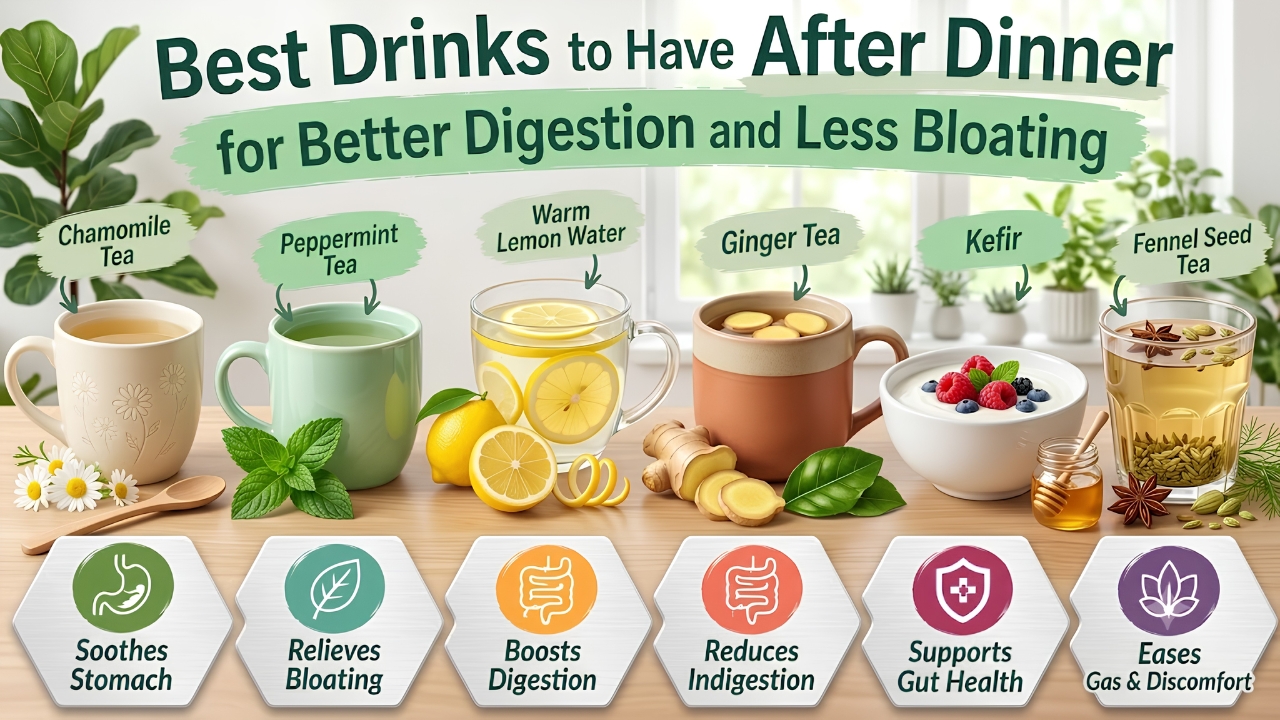
Best Nighttime Drinks: Bloating after dinner can make it difficult to relax, especially when your stomach feels full, tight, or uncomfortable just before bedtime. Eating a large meal, consuming gas-producing foods, eating too quickly, or drinking fizzy beverages can contribute to this feeling. Fortunately, choosing the right nighttime drink may help you feel more comfortable and support your digestive routine.
From soothing herbal teas to simple warm water, several drinks can be enjoyed after dinner without adding unnecessary sugar or caffeine to your evening. However, no drink can guarantee immediate relief from bloating, and the best option depends on what causes your discomfort.
1. Warm Water
Warm water is one of the simplest drinks to enjoy after dinner. It helps maintain hydration, which is important for normal digestion and regular bowel movements. Drinking water throughout the day can also help prevent constipation, which sometimes contributes to bloating.
A cup of comfortably warm water after dinner may feel soothing, particularly if you prefer something light before bedtime. You do not need to drink a large quantity at once. Sip slowly and avoid drinking so much that you feel overly full before lying down.
Warm water is an excellent caffeine-free choice for people who want a simple nighttime routine without additional ingredients.
2. Ginger Tea
Ginger tea is a popular herbal drink traditionally used to ease digestive discomfort. Ginger contains natural compounds called gingerols and shogaols, which have been studied for their potential effects on digestive function and nausea.
To prepare ginger tea, add a few thin slices of fresh ginger to a cup of hot water. Let it steep for five to ten minutes, then remove the slices before drinking. You can enjoy it plain or add a small amount of honey if desired.
Some people find ginger tea soothing after a heavy meal. However, its effect on bloating can vary, and scientific evidence specifically supporting ginger tea as a treatment for nighttime bloating remains limited. Ginger may also cause heartburn or stomach irritation in some individuals.
3. Peppermint Tea
Peppermint tea is another popular option for people who experience occasional gas or abdominal discomfort. Peppermint contains menthol, which can relax smooth muscles in the digestive tract.

Research on peppermint oil, particularly enteric-coated peppermint oil capsules, suggests potential benefits for some people with irritable bowel syndrome. However, these findings should not be assumed to apply equally to peppermint tea.
If you enjoy herbal tea, a cup of caffeine-free peppermint tea after dinner may be worth trying. Prepare it according to the package instructions and avoid adding excessive sugar.
One important consideration is acid reflux. Peppermint can relax the muscle between the stomach and esophagus, potentially worsening heartburn. If you regularly experience acid reflux, peppermint tea may not be the best nighttime choice.
4. Chamomile Tea
Chamomile tea is widely enjoyed as a calming evening beverage. Many people drink it as part of their bedtime routine because it is naturally caffeine-free and has a mild, pleasant flavor.
Chamomile has traditionally been used for digestive complaints, including gas and mild stomach discomfort. However, strong clinical evidence that chamomile tea directly relieves bloating is limited.
You can prepare chamomile tea by steeping a tea bag or dried chamomile flowers in hot water for several minutes. Drink it plain to keep added sugar to a minimum.
People who are allergic to ragweed or related plants should use caution because chamomile may trigger allergic reactions. If you take medication regularly, check with a healthcare professional before using concentrated herbal products.
5. Fennel Tea
Fennel seeds are commonly used in traditional food practices to support digestion. They contain aromatic compounds that may have antispasmodic properties, although evidence for fennel tea as a reliable treatment for bloating is still limited.
To make a simple fennel infusion, lightly crush half a teaspoon of fennel seeds and steep them in hot water for five to ten minutes. Strain the drink before serving.
Fennel tea has a mild, slightly sweet, licorice-like taste. Some people prefer it after meals because it feels light and refreshing compared with heavier beverages.
If you are pregnant, breastfeeding, have an allergy to plants in the carrot family, or have a hormone-sensitive medical condition, seek medical advice before using fennel medicinally or in concentrated amounts.
6. Warm Lemon Water
Warm lemon water is an easy nighttime drink made with fresh lemon juice and warm water. It provides hydration and a refreshing citrus flavor without requiring added sugar.
Although lemon water is often promoted as a detox drink, there is no good evidence that it cleanses the digestive system or directly removes bloating. Your liver, kidneys, and digestive system already perform the body’s normal waste-processing functions.
If you enjoy the taste, squeeze a small amount of lemon into a cup of warm water. However, lemon is acidic and may aggravate heartburn or reflux in sensitive individuals. Plain water is a better alternative if citrus triggers your symptoms.
7. Cumin Water
Cumin water is a traditional drink in many Indian households and is often consumed after meals. Cumin contains aromatic compounds that give it a distinctive earthy flavor.
To prepare it, simmer half a teaspoon of cumin seeds in a cup of water for a few minutes, then strain and allow it to cool slightly. Avoid adding excessive salt or sugar.
Cumin is widely used in cooking, but evidence that cumin water specifically relieves bloating or improves digestion in healthy adults is limited. You can still enjoy it as a flavorful, caffeine-free beverage if it suits your stomach.
Start with a small quantity and stop drinking it if you notice discomfort or an allergic reaction.

Tips for Choosing the Best Nighttime Drink
The best drink for your evening routine is one that keeps you hydrated without triggering your symptoms. Choose caffeine-free beverages and limit added sugar, as sugary drinks may worsen digestive discomfort in some people. Avoid carbonated beverages if they make you feel gassy.
Your habits after dinner matter, too. Eat slowly, avoid very large meals late at night, and consider taking a gentle 10- to 15-minute walk after eating. If you experience heartburn, try to finish dinner at least three hours before lying down.
Pay attention to how your body responds to different drinks. A beverage that feels soothing to one person may trigger symptoms in another, particularly if they have acid reflux, food sensitivities, or an underlying digestive condition.
When Should You Seek Medical Advice?
Occasional bloating is common, but frequent or persistent symptoms should not always be attributed to food choices. Constipation, lactose intolerance, irritable bowel syndrome, and other digestive conditions can cause recurring bloating.
Consult a healthcare professional if bloating continues for several weeks, becomes progressively worse, or regularly interferes with daily activities. Seek urgent medical attention if you experience severe or sudden abdominal pain, persistent vomiting, blood in your stool, or significant abdominal swelling accompanied by an inability to pass stool or gas.
Disclaimer
This article is intended for general informational and educational purposes only and should not be considered medical advice. Herbal teas and other nighttime drinks may help some people feel more comfortable, but they are not proven cures for bloating or digestive disorders. Individual responses can vary, and some ingredients may interact with medications or worsen existing conditions. Consult a qualified healthcare professional for persistent symptoms or personalized dietary advice.
