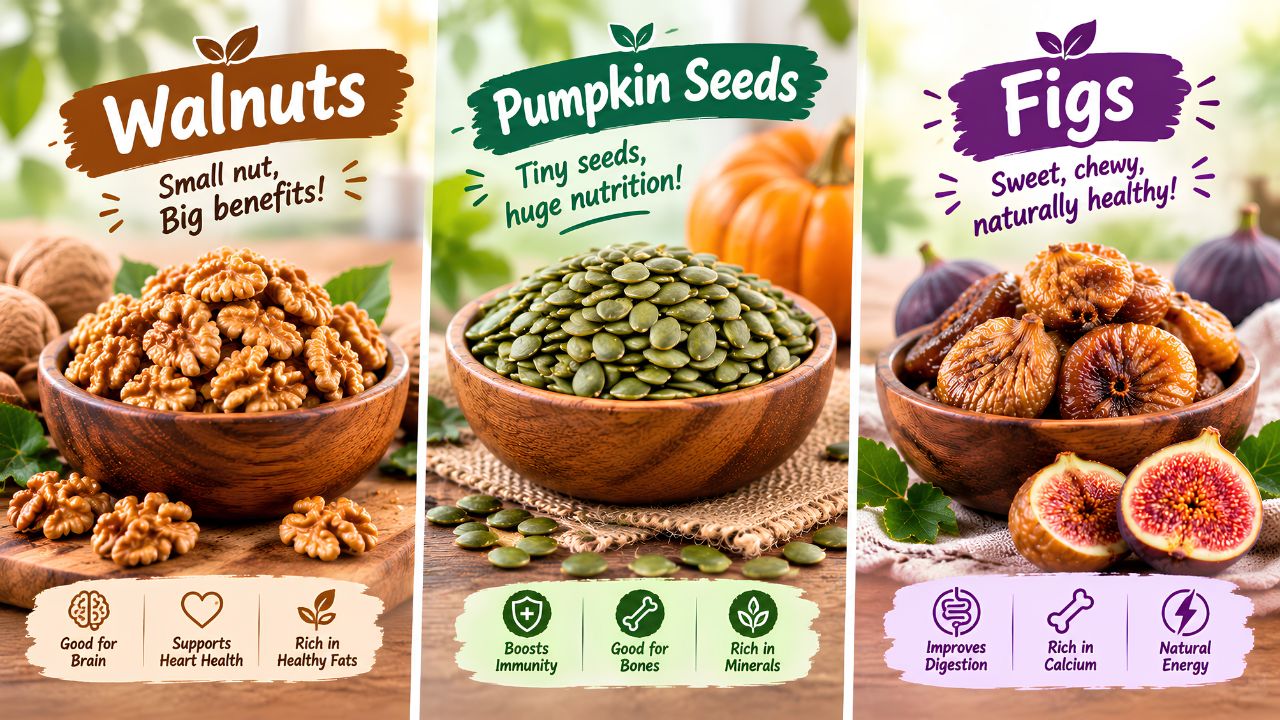
Walnuts vs Pumpkin Seeds vs Figs: Choosing healthy snacks can be challenging when so many nutritious options are available. Walnuts, pumpkin seeds, and figs are three popular foods that offer different nutritional benefits. Walnuts are known for their healthy fats, pumpkin seeds provide essential minerals and plant-based protein, and figs offer natural sweetness along with fiber and other nutrients. Although all three can be part of a balanced diet, their nutritional profiles and benefits vary.
Understanding these differences can help you choose the right food according to your health goals, daily routine, and taste preferences. Let’s compare walnuts, pumpkin seeds, and figs to discover what makes each one special and how you can include them in your diet.
1. Nutritional Benefits of Walnuts
Walnuts are nutrient-rich nuts particularly valued for their unsaturated fats, including alpha-linolenic acid (ALA), a plant-based omega-3 fatty acid. They also contain protein, fiber, magnesium, copper, and manganese, making them a useful addition to a balanced eating pattern.
One of the main advantages of walnuts is their contribution to heart health. Replacing foods high in saturated fat with sources of unsaturated fats can support healthy cholesterol levels. Walnuts also contain antioxidants and plant compounds that contribute to their overall nutritional value.
Walnuts provide energy in a relatively small serving, which makes them convenient for people who want to increase their calorie intake without eating large quantities of food. Their combination of fats, protein, and fiber may also help promote fullness between meals.
You can enjoy walnuts as a quick snack, add chopped pieces to oatmeal, or mix them into salads, smoothies, and homemade energy bites. A small handful is generally enough for a snack because walnuts are calorie-dense.
2. Nutritional Benefits of Pumpkin Seeds
Pumpkin seeds, sometimes called pepitas when sold without their outer shells, are small but nutritionally valuable. They provide plant-based protein, unsaturated fats, magnesium, zinc, iron, and phosphorus. Their nutritional composition makes them a useful choice for people looking to add more minerals and protein to their meals.
Magnesium plays a role in muscle and nerve function, energy production, and normal blood pressure regulation. Zinc supports immune function and wound healing, while iron is essential for producing hemoglobin, which carries oxygen in the blood.
Pumpkin seeds can also contribute to a satisfying snack because they contain protein and fat. These nutrients help make them more filling than many snacks made mainly from refined carbohydrates.

Another advantage is their versatility. You can sprinkle pumpkin seeds over salads, blend them into smoothies, add them to yogurt, or mix them with oats and other seeds. Lightly roasted pumpkin seeds can also be enjoyed on their own.
However, portion size matters. Pumpkin seeds are energy-dense, and heavily salted varieties can contribute considerable sodium to your daily intake. Unsalted or lightly roasted options are generally preferable for everyday consumption.
3. Nutritional Benefits of Figs
Figs are naturally sweet fruits that can be eaten fresh or dried. They contain dietary fiber, potassium, calcium, and various plant compounds. Unlike walnuts and pumpkin seeds, figs are primarily a source of carbohydrates rather than fat and protein.
One of the most notable benefits of figs is their fiber content. Dietary fiber supports regular bowel movements and contributes to digestive health. Eating fiber-rich foods as part of a balanced diet may also help support healthy cholesterol levels and blood glucose management.
Figs contain potassium, which contributes to normal muscle function and blood pressure regulation. They also provide naturally occurring sugars that supply energy, making them a convenient option when you want something sweet.
Fresh figs contain more water and are generally less calorie-dense than dried figs. Drying removes much of the water, concentrating the sugars, calories, and some nutrients in a smaller serving. Therefore, dried figs can be nutritious, but it is easy to eat more than intended.
Try adding fresh figs to fruit bowls, yogurt, or salads. Dried figs can be combined with nuts and seeds for a convenient snack, especially when you want a mixture of sweetness and crunch.
4. Walnuts vs Pumpkin Seeds vs Figs: Key Differences
Each food offers a different nutritional advantage, so comparing them by their primary nutrients is more useful than declaring one universally healthier.
Walnuts stand out for their ALA omega-3 fatty acids and unsaturated fats. They are a strong option for people who want to include more plant-based healthy fats in their diet.

Pumpkin seeds are particularly useful for increasing plant-based protein and obtaining minerals such as magnesium and zinc. They are a practical choice for people who want a crunchy addition to meals or snacks.
Figs are the most suitable of the three when your priority is fruit-based fiber and natural sweetness. They can help satisfy sweet cravings while contributing to your daily fruit intake.
The calorie content also differs. Walnuts and pumpkin seeds are relatively calorie-dense because of their fat content, whereas fresh figs contain more water and generally provide fewer calories per gram. Dried figs are more concentrated in calories and sugars than fresh figs.
For the best comparison, consider the form and serving size. A small handful of nuts or seeds is not nutritionally equivalent to a large bowl of fruit.
5. Which Is Best for Weight Gain?
If your goal is healthy weight gain, walnuts and pumpkin seeds can be especially helpful because they provide substantial energy in small portions. Adding them to meals can increase calorie intake without requiring a much larger volume of food.
For example, you could add chopped walnuts to oatmeal, sprinkle pumpkin seeds over a sandwich or salad, or blend either ingredient into a smoothie. Figs can complement these foods by providing carbohydrates and fiber. Dried figs are particularly convenient when you need a compact, energy-rich snack.
However, healthy weight gain requires more than eating calorie-dense foods. Regular meals, sufficient protein, a varied diet, and appropriate strength-training exercises can all contribute to your progress.
6. Which Is Best for Heart Health and Digestion?
For heart health, walnuts are a noteworthy choice because of their unsaturated fats and plant-based omega-3 fatty acids. Pumpkin seeds also provide unsaturated fats and magnesium, making them another useful option in a heart-conscious diet.
For digestion, figs have an advantage because of their fiber content. Walnuts and pumpkin seeds also contain fiber, but figs can be an especially convenient way to add fruit-based fiber to your routine. Increasing fiber gradually and drinking enough water can help support digestive comfort.
For general nutrition, there is no need to choose only one. Eating a variety of nuts, seeds, fruits, vegetables, whole grains, and protein sources provides a broader range of nutrients than relying on a single food.
7. How to Include All Three in Your Daily Diet
A simple approach is to enjoy a small handful of walnuts and pumpkin seeds alongside one or two figs, adjusting the portions to your energy needs and overall diet. You can also divide them across the day rather than eating everything at once.
Add walnuts to breakfast oatmeal, use pumpkin seeds as a topping for lunch, and enjoy fresh or dried figs as an afternoon snack. Combining these foods with yogurt, milk, or another suitable protein source can help make your meals more balanced.
Choose unsalted pumpkin seeds when possible, store walnuts properly to preserve their quality, and check dried fig packaging for added sugars or unnecessary ingredients. If you have a nut or seed allergy, avoid the relevant food and seek appropriate medical advice.
8. Final Verdict: Which One Should You Choose?
Walnuts, pumpkin seeds, and figs each deserve a place in a varied, balanced diet. Walnuts are an excellent option for plant-based omega-3 fats, pumpkin seeds provide protein and important minerals, and figs contribute fiber, potassium, and natural sweetness.
The best choice depends on your individual needs. If you want healthy fats, consider walnuts. If you want extra plant-based protein and minerals, choose pumpkin seeds. If you want more fruit-based fiber or a naturally sweet snack, figs are a great option.
Rather than treating these foods as competitors, consider combining them in sensible portions. Their different nutritional strengths can complement one another and make healthy eating more enjoyable.
Disclaimer
This article is intended for general informational and educational purposes only and should not be considered medical advice, a diagnosis, or a substitute for professional dietary guidance. Individual nutritional needs vary according to age, health status, activity level, and other factors. Consult a qualified healthcare professional or registered dietitian for personalized advice, particularly if you have a medical condition, food allergy, or specific dietary requirement.
