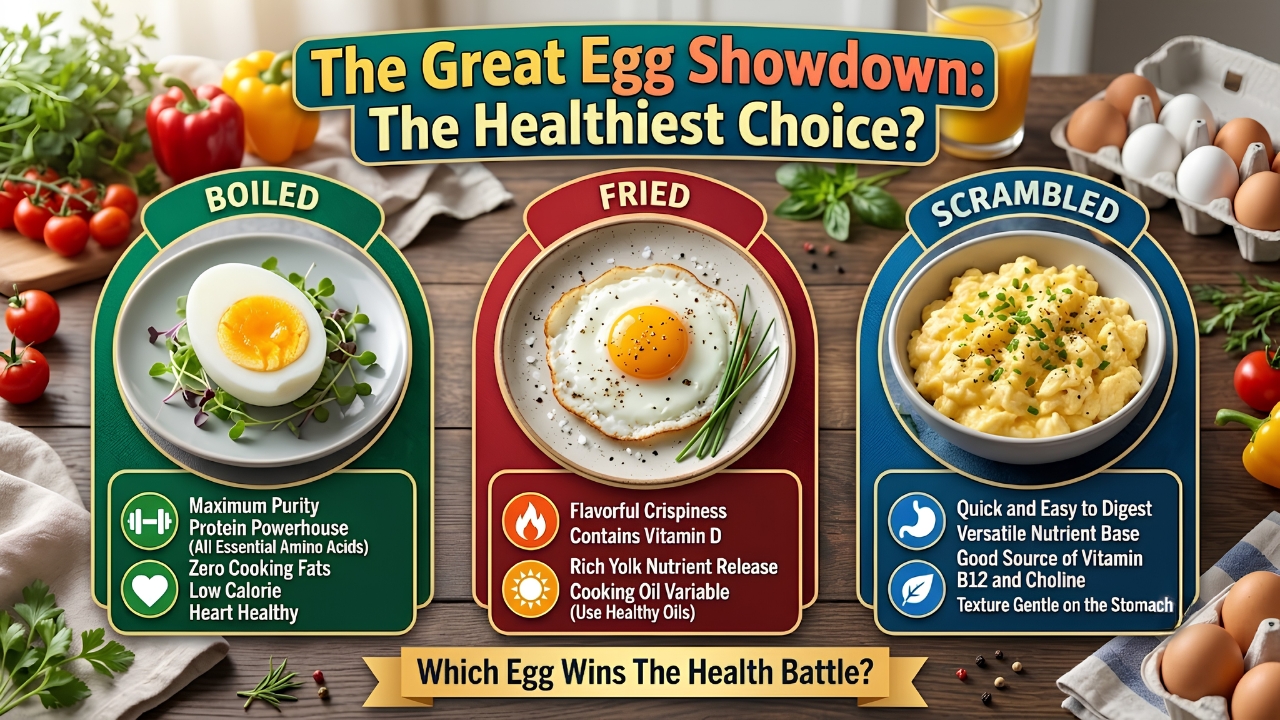
Boiled or Fried or Scrambled Eggs: Eggs are one of the most popular breakfast foods worldwide, and for good reason. They are affordable, easy to prepare, and packed with essential nutrients. Whether you prefer boiled eggs on busy mornings, fried eggs with toast, or creamy scrambled eggs, each cooking method offers a slightly different eating experience.
But have you ever wondered which preparation is actually healthier? The answer depends on several factors, including the amount of oil or butter used, portion size, cooking temperature, and what you eat alongside your eggs. While all three methods can fit into a balanced diet, understanding their nutritional differences can help you make better choices for your health goals.
1. Nutritional Benefits of Eggs
Before comparing cooking methods, it helps to understand why eggs are considered nutritious. A large egg provides approximately 6–7 grams of high-quality protein, along with vitamin B12, vitamin D, selenium, and choline. Eggs also contain smaller amounts of other essential nutrients.
Protein is important for building and maintaining muscles, repairing body tissues, and supporting many everyday functions. Eggs contain all nine essential amino acids, making them a complete protein source.
The yolk contains most of an egg’s vitamins, minerals, and fats, while the white provides much of its protein. Although egg yolks contain dietary cholesterol, their overall effect on blood cholesterol varies between individuals. For most healthy people, eggs can be included in a balanced diet, but those with certain medical conditions may need personalized dietary advice.
2. Boiled Eggs: A Simple and Nutritious Choice
Boiled eggs are often considered one of the healthiest ways to prepare eggs because they require no added oil or butter. You simply cook the eggs in water until they reach your preferred consistency.
A large boiled egg contains roughly 70–80 calories and around 6–7 grams of protein. Its calorie content is similar to that of a plain egg prepared using other cooking methods, provided no extra ingredients are added.
One major advantage of boiled eggs is portion control. They are easy to prepare in advance, carry to work, or include in a lunchbox. They also pair well with whole-grain toast, vegetables, and fruit.
Boiled eggs can be especially useful for people who want to manage their calorie intake without sacrificing protein. However, eating only boiled eggs does not automatically make a diet healthy. Overall food choices, physical activity, and portion sizes remain important.

For food safety, cook eggs until the whites and yolks are firm, particularly for young children, older adults, pregnant people, and anyone with a weakened immune system.
3. Fried Eggs: Flavorful but Dependent on Cooking Fat
Fried eggs are a favorite for people who enjoy a crispy edge and a soft yolk. They can be delicious, but their nutritional value depends partly on how much cooking fat is used.
A fried egg prepared with a small amount of oil may have a calorie content close to that of a boiled egg. However, using generous amounts of butter or oil increases the total calories and fat in the meal.
The type of fat also matters. Oils rich in unsaturated fats, such as olive or canola oil, are generally preferable to using large amounts of butter or other fats high in saturated fat.
Frying at excessively high temperatures can cause oil to smoke and may negatively affect its quality. Using moderate heat and avoiding repeatedly overheated cooking oil are sensible practices.
If you enjoy fried eggs, you do not necessarily need to give them up. Use a non-stick pan, measure the oil rather than pouring freely, and serve the eggs with vegetables or whole-grain toast. These small changes can make your breakfast more balanced without sacrificing flavor.
4. Scrambled Eggs: Creamy, Versatile, and Easy to Customize
Scrambled eggs are another popular breakfast option because they are quick to cook and easy to combine with other ingredients. They can be prepared simply with eggs or made richer by adding milk, cheese, butter, or cream.
Plain scrambled eggs cooked with minimal oil can have a nutritional profile similar to boiled eggs. However, the addition of butter, cheese, and cream increases the calorie and saturated fat content.
Scrambled eggs are also an excellent way to include more vegetables in your breakfast. Spinach, tomatoes, onions, mushrooms, and bell peppers add flavor, fiber, and additional nutrients without necessarily adding many calories.

For a balanced meal, try scrambling eggs with chopped vegetables and a small amount of oil. You can serve them with whole-grain bread or another fiber-rich carbohydrate source.
Cook scrambled eggs thoroughly until they are firm and no liquid egg remains. This helps reduce the risk of foodborne illness.
5. Boiled vs Fried vs Scrambled Eggs: Nutritional Comparison
The biggest difference between these cooking methods is usually not the egg itself but the ingredients added during preparation.
Boiled eggs generally have the most predictable calorie content because they require no cooking fat. Fried eggs may contain additional calories from oil or butter, while scrambled eggs can vary considerably depending on whether milk, cheese, or cream is included.
In terms of protein, all three methods provide similar amounts when prepared using the same number of eggs. Cooking does not eliminate the protein in an egg, although excessive heat can affect some of its properties.
The cooking method can also influence how certain nutrients are retained, but the differences are generally less important for everyday meal planning than the overall quality of your diet.
There is no single winner in every category. A fried egg cooked with minimal unsaturated oil can be a nutritious choice, just as scrambled eggs prepared with vegetables can make a well-rounded meal.
6. Which Egg Cooking Method Is Best for Weight Loss?
If weight loss is your goal, boiled eggs can be a convenient option because they require no added cooking fat and are easy to portion. Their protein content may help you feel satisfied after a meal.
However, fried and scrambled eggs can also fit into a weight-management plan. The key is to pay attention to added fats, cheese, creamy sauces, and calorie-dense side dishes.
For example, two boiled eggs with whole-grain toast and tomatoes can provide a satisfying breakfast. Alternatively, scrambled eggs with spinach or a fried egg cooked with a measured amount of oil can offer similar benefits.
Weight loss depends on your overall energy intake, activity level, sleep, and other lifestyle factors. No particular egg preparation guarantees weight loss on its own.
7. Which Is Best for Muscle Gain and Everyday Health?
For muscle growth and recovery, all three preparations can provide high-quality protein. The most important factors are your total daily protein intake, regular strength training, and adequate overall nutrition.
If you are trying to gain weight, scrambled or fried eggs may be convenient ways to increase your energy intake, especially when paired with nutritious foods. Boiled eggs can also contribute to weight gain when eaten as part of a calorie-surplus diet.
For everyday health, focus on variety. Include vegetables, whole grains, fruit, and other protein sources alongside eggs. Choose cooking methods that suit your preferences while limiting excessive amounts of salt, butter, and oil.
8. Final Verdict: Which Cooking Method Should You Choose?
Boiled eggs are an excellent choice if you prefer a simple, low-calorie preparation with no added fat. Fried eggs are suitable for those who enjoy a crisp texture, especially when cooked with a small amount of unsaturated oil. Scrambled eggs offer flexibility and make it easy to add vegetables and other nutritious ingredients.
Ultimately, the healthiest method is the one that fits your dietary needs and can be part of a balanced eating routine. Instead of worrying too much about choosing the perfect preparation, focus on cooking eggs safely, controlling added fats, and creating balanced meals.
Disclaimer
This article is intended for general informational and educational purposes only and should not be considered medical advice or a substitute for professional dietary guidance. Individual nutritional needs may vary depending on age, activity level, health conditions, and personal dietary requirements. Consult a qualified healthcare professional or registered dietitian for personalized recommendations, particularly if you have high cholesterol, cardiovascular disease, an egg allergy, or another medical condition that affects your diet.
