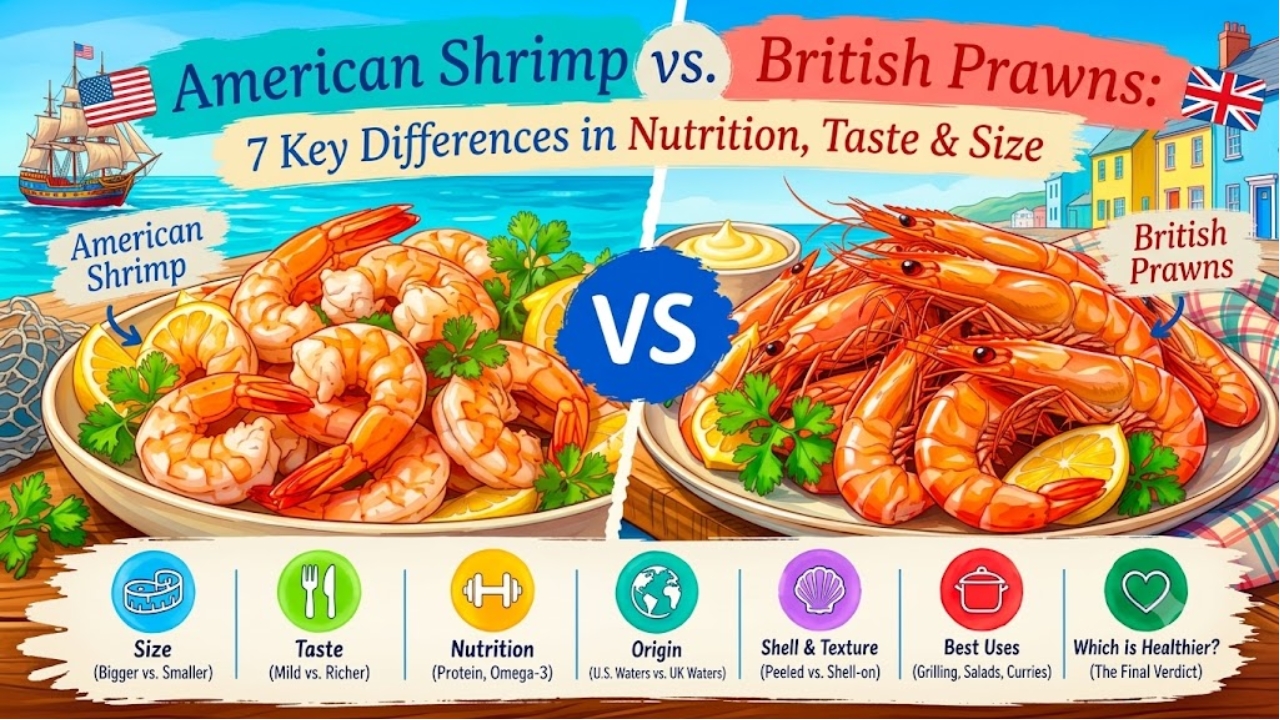
American Shrimp vs. British Prawns: Shrimp and prawns are popular seafood choices enjoyed in everything from simple home-cooked meals to restaurant dishes. They are used in curries, salads, pasta, stir-fries, and grilled seafood platters. Although the two names are sometimes used interchangeably, their meanings can vary depending on where you live. In the United States, people commonly use the word shrimp, while in Britain, prawns is the more familiar term for many of the same types of seafood.
However, shrimp and prawns can also refer to different groups of crustaceans. Their appearance, size, flavor, and nutritional composition depend on the species, habitat, and preparation method. Understanding these differences can help you make better choices when shopping for seafood or deciding what to cook.
1. Naming Differences in America and Britain
One of the biggest differences between American shrimp and British prawns is how the terms are used. In the United States, shrimp is the standard word for these small, edible crustaceans. They are commonly sold fresh, frozen, peeled, or with their shells intact.
In Britain, prawns is the more common term on supermarket packaging and restaurant menus. Foods described as king prawns, tiger prawns, or cooked prawns are familiar options for British consumers.
The distinction is not always based on the animal’s biological classification. Some species sold as prawns in Britain may be called shrimp in America, even when the seafood is biologically similar. Therefore, the label alone does not always tell you which species you are buying.
2. Differences in Physical Structure
True shrimp and prawns belong to different groups of decapod crustaceans, and their bodies have some structural differences. These distinctions can help identify them, although they are not always obvious when the seafood has been peeled or cooked.
Shrimp generally have a body shape that appears more curved, particularly when cooked. Their abdominal segments overlap in a characteristic pattern, with the second segment overlapping the first and third.
Prawns typically have a straighter body structure, and their abdominal segments overlap differently. They also tend to have three pairs of legs ending in claw-like structures, whereas shrimp generally have two pairs of claw-bearing legs.
These are biological distinctions rather than universal rules for supermarket products. Since common names vary between countries, checking the species name is more reliable when precise identification matters.

3. Size and Appearance
Size is another commonly discussed difference, but it is important not to assume that every prawn is larger than every shrimp. Both groups include species of different sizes.
American markets offer small shrimp suitable for salads, medium shrimp for everyday cooking, and jumbo shrimp for grilling or seafood platters. British supermarkets sell small prawns for sandwiches and salads, as well as large king prawns for curries, skewers, and stir-fries.
Tiger prawns are often recognized by their striped shells, while many shrimp species have gray, pink, brown, or translucent coloring before cooking. Their appearance changes depending on species, habitat, and preparation.
When purchasing seafood, look at the count per pound or kilogram. A lower count generally means larger individual pieces, making this measurement more useful than relying on the words shrimp or prawn alone.
4. Taste and Texture
Shrimp and prawns can both have a mildly sweet, delicate seafood flavor. Their exact taste depends on the species, freshness, diet, and cooking technique.
Smaller shrimp often have a tender texture and work well in tacos, fried rice, soups, and pasta. Larger prawns, such as king prawns, may offer a firmer, meatier bite that suits grilling and pan-searing.
However, size does not automatically determine flavor. Some small prawns have a strong, distinctive seafood taste, while certain large shrimp varieties are naturally sweet and delicate.
Overcooking can make either type rubbery and tough. For the best results, cook seafood until it is opaque and reaches an internal temperature of 145°F (63°C). Remove it from the heat promptly once properly cooked to help preserve its texture.
5. Nutritional Differences
Shrimp and prawns are generally nutrient-rich seafood options that provide high-quality protein while being relatively low in calories when prepared without heavy sauces or breading.

A 100-gram serving of plain cooked shrimp typically provides around 20–24 grams of protein and approximately 85–110 calories. Cooked prawns can offer a similar nutritional profile, although exact values vary by species and preparation.
Both can supply vitamin B12, selenium, iodine, and other nutrients involved in normal body functions. They also contain cholesterol, but the amount varies by species and serving size.
There is no universal rule that shrimp contain more protein or that prawns are healthier. For a meaningful comparison, check the nutrition information for the specific product and compare equal serving sizes.
Preparation makes a significant difference, too. Boiling, steaming, or grilling with modest amounts of oil generally keeps the meal lighter than deep-frying or adding large quantities of butter and creamy sauces.
6. Popular Cooking Methods and Dishes
Shrimp and prawns are versatile ingredients that absorb flavors from spices, herbs, marinades, and sauces. In the United States, shrimp are widely used in shrimp cocktails, gumbo, seafood boils, shrimp tacos, and garlic shrimp pasta.
In Britain, prawns commonly appear in prawn sandwiches, prawn cocktail, curry dishes, and stir-fries. King prawns are particularly popular in spicy curries and grilled seafood recipes.
These cooking traditions are not exclusive to either country. American cooks prepare curries and prawn-style dishes, while British restaurants serve many international shrimp recipes.
For everyday cooking, choose the size that suits the dish. Small seafood pieces work well in soups and rice dishes, while larger pieces are convenient for skewers, grilling, and main-course servings.
7. Price, Availability, and Buying Tips
The price of shrimp and prawns depends on species, size, farming or fishing methods, origin, processing, and whether the product is fresh or frozen. Large king prawns and specialty wild-caught varieties may cost more than smaller farmed shrimp, but this is not always the case.

Frozen seafood can be a convenient and nutritious option because it is often processed soon after harvesting. When buying frozen products, check the package for added salt, preservatives, or coatings that may affect the final nutritional value.
Look for intact packaging, clear labeling, and information about the species and country of origin. If buying fresh seafood, choose products kept properly chilled and avoid seafood with a strong, unpleasant odor.
People with shellfish allergies should avoid shrimp and prawns because both can trigger allergic reactions. If you have a known shellfish allergy, read food labels carefully and ask restaurant staff about ingredients and cross-contact.
American Shrimp vs. British Prawns: Which Should You Choose?
American shrimp and British prawns are not necessarily two completely different foods. In many cases, the main difference is regional naming, although genuine biological differences exist between shrimp and prawns as groups.
Both can provide lean protein and important nutrients, and both work well in a wide range of recipes. Instead of choosing based only on the name, consider the species, size, freshness, price, and intended cooking method.
For salads and quick meals, smaller shrimp or prawns are practical choices. For grilling, curries, or impressive seafood platters, larger varieties may be more suitable. Whichever you choose, proper storage and cooking will help you enjoy seafood safely.
Disclaimer
This article is intended for general informational and educational purposes only and should not be considered medical or dietary advice. Nutritional values vary according to species, serving size, processing, and cooking methods. People with shellfish allergies should avoid shrimp and prawns and seek guidance from a qualified healthcare professional regarding safe food choices. Always follow appropriate seafood storage, handling, and cooking recommendations.
