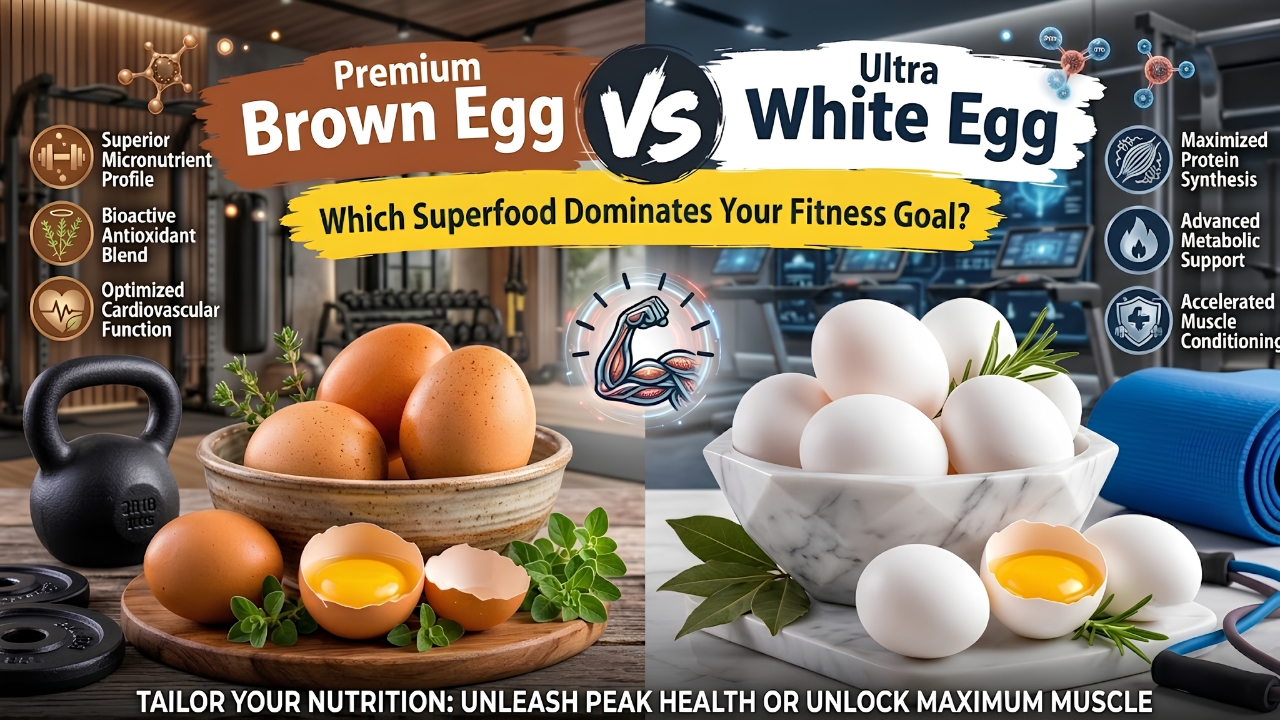
Brown Eggs vs White Eggs: Eggs are one of the most popular foods for people who want to eat healthy, build muscle, or maintain a balanced diet. They are affordable, easy to prepare, and packed with essential nutrients. However, when buying eggs, many people wonder whether brown eggs are healthier than white eggs, especially if they regularly go to the gym.
Some people believe brown eggs contain more protein, while others think white eggs are less nutritious because they usually cost less. But is there any real difference between them? Understanding how brown and white eggs compare can help you choose the right option for your fitness goals and everyday meals.
Brown Eggs vs White Eggs: What Is the Main Difference?
The biggest difference between brown eggs and white eggs is the color of their shells. This color mainly depends on the breed of the hen that lays the egg. Hens with certain genetic characteristics produce brown eggs, while others produce white eggs.
The shell color does not automatically determine the egg’s nutritional value. Both brown and white eggs can provide similar amounts of protein, fat, vitamins, and minerals when they come from hens raised under comparable conditions.
Brown eggs sometimes cost more because the breeds that lay them may require more feed or have higher production costs. However, a higher price does not necessarily mean that the egg contains more nutrients.
Factors such as the hen’s diet, living conditions, age, and the egg’s size can influence nutritional quality. Therefore, it is more useful to compare egg size, freshness, production methods, and price than to judge an egg by its shell color alone.
Nutritional Comparison: Brown Eggs vs White Eggs
Brown and white eggs have broadly similar nutritional profiles. A typical large egg weighing around 50 grams provides approximately 6–7 grams of protein and about 70–80 calories, although the exact figures vary with size.
Here is a general nutritional overview of one large egg:
- Protein: approximately 6–7 grams
- Calories: approximately 70–80
- Fat: approximately 5 grams
- Carbohydrates: less than 1 gram
- Vitamin B12: supports normal nerve function and red blood cell formation
- Choline: supports brain function and other important body processes
- Selenium: contributes to normal thyroid function and antioxidant protection
These values apply broadly to both brown and white eggs. Neither shell color consistently provides a meaningful advantage in protein content.

The yolk contains most of the egg’s fat and several important nutrients, including choline and fat-soluble vitamins. The egg white, on the other hand, provides protein with very little fat.
If your goal is to improve your diet, eating a suitable portion of eggs as part of a balanced meal is more important than choosing a particular shell color.
Which Eggs Are Better for Gym and Muscle Building?
For people who work out regularly, eggs are a convenient source of high-quality protein. They contain all nine essential amino acids, which the body needs for muscle repair and growth.
Brown eggs and white eggs are equally useful for muscle building when their size and nutritional composition are similar. Choosing brown eggs will not automatically help you build bigger muscles or recover faster after exercise.
A single large egg provides around 6–7 grams of protein. If you eat two eggs, you can get approximately 12–14 grams of protein. Combining them with milk, yogurt, paneer, lentils, or other protein-rich foods can help you meet your daily protein needs.
Your total protein intake throughout the day matters more than the color of the eggs you eat. Resistance training, adequate calories, sufficient sleep, and consistent exercise are also important for building muscle.
If you want to increase protein without adding much fat, you can combine whole eggs with additional egg whites. Whole eggs provide useful nutrients from the yolk, while egg whites add extra protein with very little fat.
Brown Eggs vs White Eggs for Weight Loss
Eggs can fit into a weight-management diet because they provide protein and can help make meals satisfying. However, brown eggs do not have a special weight-loss advantage over white eggs.
Both types contain similar calories when they are the same size. The way you prepare them can make a bigger difference to the total calories in your meal.
For example, boiled or poached eggs generally require little or no added fat. Fried eggs prepared with generous amounts of oil or butter contain additional calories. Similarly, serving eggs with vegetables and whole-grain toast creates a different nutritional balance from serving them with large portions of processed meat and buttered bread.
Protein helps maintain muscle while losing weight, especially when combined with resistance training. Eggs can contribute to this goal, but weight management ultimately depends on your overall food intake, activity level, and individual needs.
Are Brown Eggs Healthier Than White Eggs?
There is no consistent evidence that brown eggs are inherently healthier than white eggs simply because of their shell color. Both provide high-quality protein and a range of essential nutrients.
However, eggs from different production systems may have nutritional differences. For example, a hen’s diet can influence certain nutrients in the egg, including the amount of omega-3 fatty acids. These differences relate more to feed and farming practices than to shell color.
Egg freshness, proper storage, and safe handling are also important considerations. Choose eggs with clean, uncracked shells and purchase them from a reliable source. Store them according to local food-safety guidance and cook them thoroughly, particularly if you are pregnant, elderly, immunocompromised, or preparing food for young children.
If you are comparing eggs marketed as organic, free-range, or omega-3 enriched, check the labeling and available nutritional information instead of assuming that brown eggs are automatically better.
Which Eggs Should You Buy?
The best choice depends on your budget, preferences, and nutritional goals. If brown eggs are affordable and you prefer them, there is no problem choosing them. If white eggs are cheaper or easier to find, they are also an excellent option.
For gym enthusiasts, the priority should be getting enough protein from a variety of foods. Consider egg size, freshness, price, and how the eggs fit into your daily meals.
You can prepare eggs in several ways, including boiling, scrambling, poaching, and making omelets with vegetables. Using different cooking methods can keep your meals interesting without making nutrition unnecessarily complicated.

Rather than spending extra money simply for a brown shell, focus on a balanced diet that supplies enough protein, carbohydrates, healthy fats, vitamins, and minerals.
Final Verdict: Brown Eggs vs White Eggs
Brown eggs and white eggs are nutritionally very similar. Their shell color mainly reflects the breed of the hen, not the amount of protein or overall health benefits they provide.
For gym workouts, muscle growth, and general health, both are excellent choices. A typical large egg offers around 6–7 grams of protein, along with several essential nutrients that support normal body functions.
If you want to build muscle, focus on your total daily protein intake, regular strength training, and recovery. If your goal is weight management, pay attention to portion sizes and cooking methods.
Ultimately, choose fresh, good-quality eggs that suit your budget. You do not need to pay more for brown eggs unless you have another reason to prefer them.
Disclaimer
This article is intended for general informational and educational purposes only. Nutritional values are approximate and can vary depending on egg size, hen diet, and production conditions. Individual dietary needs may differ based on age, activity level, health status, and fitness goals. People with egg allergies or specific medical dietary requirements should seek advice from a qualified healthcare professional or registered dietitian.
