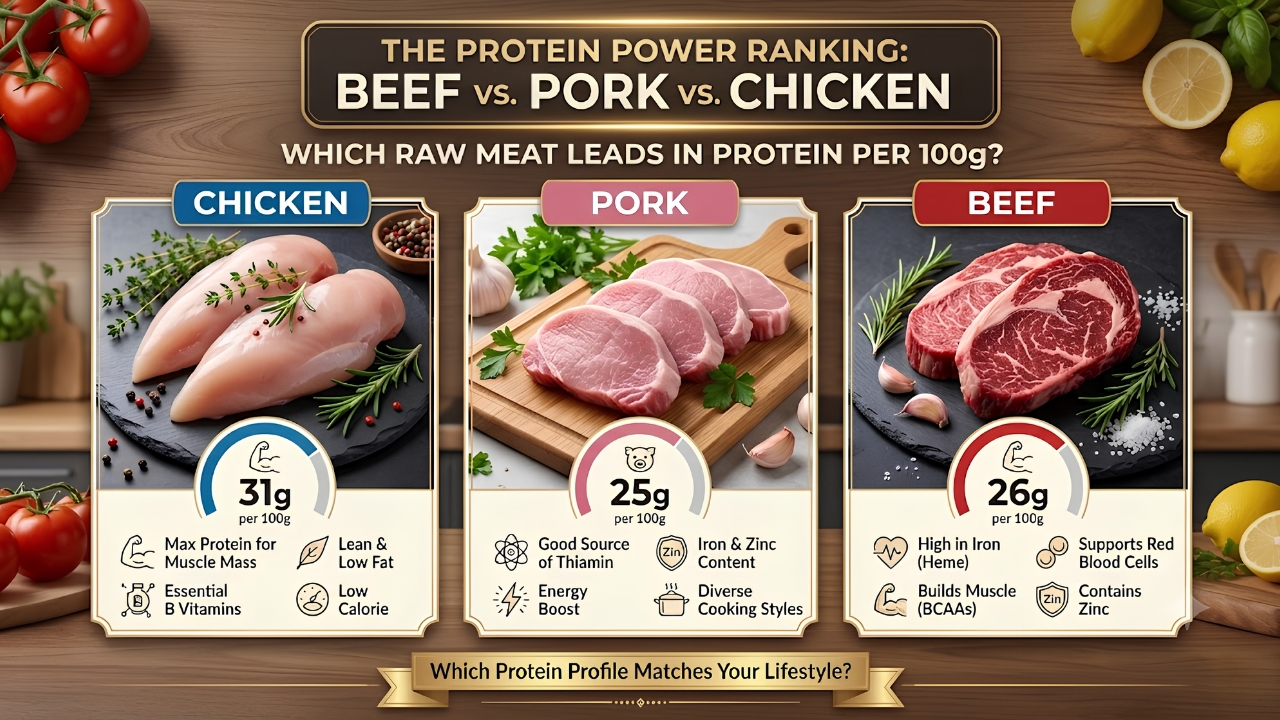
Chicken vs Pork vs Beef: Protein is an essential nutrient that helps build muscles, repair body tissues, and support overall health. Meat is one of the most popular sources of protein, but not all types of meat provide the same amount. Chicken, pork, and beef are three widely consumed options, each offering different nutritional benefits, flavors, and cooking possibilities.
If you are trying to build muscle, maintain a balanced diet, or simply increase your daily protein intake, understanding the differences between these meats can help you make better food choices. So, which meat has the most protein per 100 grams? Let’s compare chicken, pork, and beef to find out.
Protein Content in Chicken, Pork, and Beef per 100 Grams
The protein content of meat depends on the cut, fat content, and whether it is measured raw or cooked. Cooking removes water from meat, which can increase the amount of protein measured per 100 grams.
Here is an approximate comparison of protein content per 100 grams of cooked meat:
- Chicken breast: 30–31 grams of protein
- Lean beef: 26–30 grams of protein
- Lean pork: 25–29 grams of protein
These values are estimates and can vary depending on the specific cut and cooking method. Chicken breast generally provides the most protein for its weight, particularly when it is skinless and cooked without much added fat. However, lean beef and pork can also provide substantial amounts of protein.
1. Chicken: A High-Protein Choice
Chicken is a favorite among fitness enthusiasts, athletes, and people who want to increase their protein intake without consuming too much fat. Skinless chicken breast is especially popular because it provides a high amount of protein relative to its calorie content.
A 100-gram serving of cooked chicken breast contains approximately 30–31 grams of protein. It also supplies important nutrients, including vitamin B6, niacin, phosphorus, and selenium.
One of the biggest advantages of chicken is its versatility. You can grill it, bake it, roast it, or cook it in a curry with your favorite spices. For a balanced meal, combine chicken with vegetables, whole grains, or other fiber-rich foods.
Chicken thighs contain protein too, although their fat and calorie content is generally higher than that of skinless chicken breast. Removing the skin can help reduce the fat content.

If your main goal is to get more protein while keeping calories relatively low, skinless chicken breast is an excellent option.
2. Pork: A Nutritious Source of Protein
Pork is another protein-rich meat that can contribute to muscle maintenance and overall nutrition. Its nutritional value varies considerably depending on the cut. Lean pork tenderloin and loin cuts are generally better choices when you want plenty of protein without excessive fat.
A 100-gram serving of cooked lean pork typically provides around 25–29 grams of protein. Pork also contains thiamine, vitamin B6, vitamin B12, zinc, and selenium. Thiamine is particularly important for helping the body convert food into energy.
Pork can be prepared in several ways, including roasting, grilling, baking, and stir-frying. Choosing lean cuts and limiting heavy sauces can help keep the meal balanced.
However, not every pork product has the same nutritional profile. Bacon, sausages, ham, and other processed pork products may contain substantial amounts of sodium and saturated fat. They can also contain preservatives, depending on how they are made.
For a healthier everyday option, choose fresh, lean pork and cook it thoroughly. This allows you to benefit from its protein and other nutrients without relying heavily on processed meat products.
3. Beef: Protein Plus Essential Nutrients
Beef is a valuable source of protein and several nutrients that support normal body functions. Lean cuts, such as sirloin and certain round cuts, can provide a substantial amount of protein per serving.
A 100-gram serving of cooked lean beef generally contains around 26–30 grams of protein. Beef is also rich in vitamin B12, zinc, and iron. It contains heme iron, a form of iron that the body can absorb relatively efficiently.
These nutrients make beef a useful option for people who want to include more iron and vitamin B12 in their diets. However, its fat and calorie content depends on the cut. Lean beef usually contains less fat than heavily marbled cuts.

You can grill, roast, or pan-cook beef, depending on your preference. Pairing it with vegetables and whole grains creates a more balanced meal.
It is also worth distinguishing fresh beef from processed beef products. Limiting processed meats, such as certain sausages and cured beef products, is a sensible approach to long-term health.
Chicken vs Pork vs Beef: Which Is Best for Muscle Building?
All three meats provide complete protein, meaning they contain all nine essential amino acids that the body needs from food. These amino acids help repair muscle tissue and support muscle growth when combined with suitable exercise and sufficient overall nutrition.
Chicken breast is often the preferred choice for people focused on muscle building because it offers plenty of protein with relatively little fat. Lean beef is another strong option, particularly for people who also want iron and vitamin B12. Lean pork provides a similar benefit and can add variety to a high-protein diet.
However, eating more protein alone does not automatically build muscle. Resistance training, adequate calorie intake, sufficient sleep, and consistent eating habits also matter.
You do not need to eat the same meat every day to meet your protein needs. Rotating between different protein sources can make your diet more enjoyable and help you obtain a wider range of nutrients.
How to Choose the Right Meat for Your Diet
The best meat depends on your nutritional goals, preferences, and overall eating habits.
If you want a high-protein option with fewer calories, skinless chicken breast is a practical choice. If you want more dietary iron and vitamin B12, lean beef can be beneficial. If you enjoy pork, lean tenderloin is another nutritious option.
Pay attention to portion sizes, cooking methods, and added ingredients. Grilling, baking, roasting, and steaming alongside vegetables can help you prepare balanced meals. Deep-frying meat or adding large amounts of butter, oil, and rich sauces can increase the meal’s calorie content.
It is also helpful to include other protein sources, such as eggs, dairy products, beans, lentils, tofu, and nuts. A varied diet can support your nutritional needs without depending entirely on meat.
Final Verdict: Which Meat Has the Most Protein per 100g?
When comparing cooked meat, chicken breast generally comes out on top for protein content per 100 grams, with approximately 30–31 grams. Lean beef follows closely at around 26–30 grams, while lean pork typically provides about 25–29 grams.
The differences are not always dramatic, and some cuts may overlap in protein content. Cooking methods, moisture loss, and fat levels can all affect the final numbers.
Ultimately, chicken is a great choice for lean protein, beef offers valuable iron and vitamin B12, and pork supplies protein along with important B vitamins. The best option is the one that fits your nutritional needs, food preferences, and overall balanced diet.
Disclaimer
This article is intended for general informational and educational purposes only. Protein values are approximate and may vary according to the meat cut, preparation method, and whether the meat is weighed raw or cooked. Individual protein requirements differ based on age, activity level, health status, and personal goals. Consult a qualified healthcare professional or registered dietitian for personalized dietary advice.
