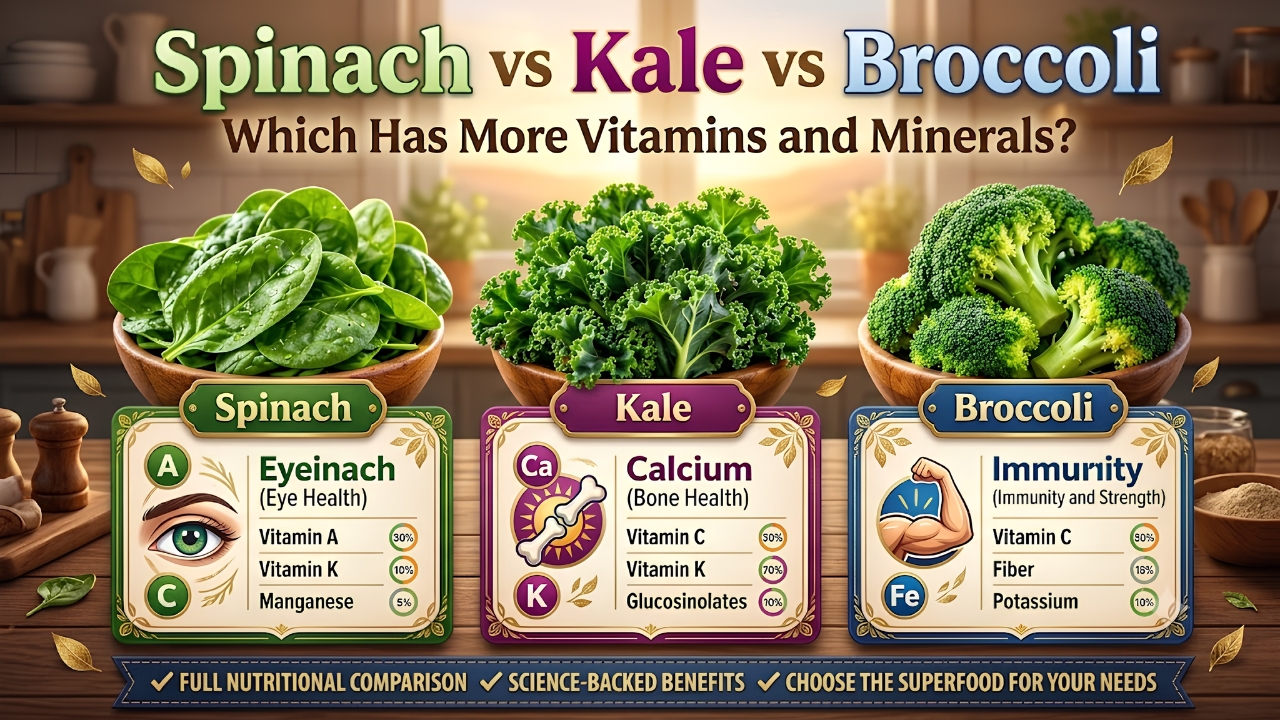
Spinach vs Kale vs Broccoli: Eating vegetables regularly is one of the simplest ways to improve your daily nutrition. Among the many healthy options available, spinach, kale, and broccoli stand out for their impressive vitamin and mineral content. They are widely used in everyday meals, salads, soups, smoothies, and other recipes, making it easy to include them in a balanced diet.
Although these three vegetables share several nutritional benefits, each has its own strengths. Spinach is known for its folate and iron content, kale is particularly rich in vitamins K and C, and broccoli provides vitamin C, folate, and fiber. But which vegetable offers the best overall nutrition? Let’s compare their nutritional differences and health benefits to help you decide.
Spinach vs Kale vs Broccoli: Nutritional Comparison
Spinach, kale, and broccoli are all nutrient-dense vegetables, meaning they provide essential nutrients without contributing many calories. However, their nutritional profiles differ depending on the serving size and whether they are eaten raw or cooked.
For a simple comparison, one cup of raw vegetables provides approximately the following nutrients:
- Spinach: 7 calories, 0.9 grams of protein, 0.7 grams of fiber, and around 28 milligrams of vitamin C.
- Kale: 7 calories, 0.6 grams of protein, 0.9 grams of fiber, and around 20 milligrams of vitamin C.
- Broccoli: 31 calories, 2.6 grams of protein, 2.4 grams of fiber, and around 81 milligrams of vitamin C.
These figures are approximate and can vary with the variety and serving size. Broccoli generally provides more fiber and vitamin C per cup than raw spinach or kale. Spinach and kale are especially notable for their vitamin K content, while spinach is also a useful source of folate.
Keep in mind that a cup of chopped broccoli weighs more than a cup of loosely packed leafy greens. Comparing equal weights can provide a more meaningful picture of their nutritional differences.
Spinach: A Good Source of Folate and Essential Minerals
Spinach is a popular leafy green that is easy to add to a wide range of meals. It contains folate, vitamin K, vitamin A precursors, vitamin C, and several minerals, including iron and magnesium.
Folate plays an important role in cell division and the formation of healthy red blood cells. It is particularly important during pregnancy because adequate folate intake supports normal fetal development.
Spinach also contains non-heme iron, which helps the body produce hemoglobin. However, the iron in plant foods is not absorbed as efficiently as the iron found in many animal foods. Pairing spinach with vitamin C-rich foods, such as lemon, tomatoes, or bell peppers, can help improve iron absorption.

Another benefit of spinach is its versatility. You can add it to dal, vegetable curries, soups, omelets, sandwiches, or smoothies. Light cooking can reduce its volume, allowing you to eat a larger amount in one serving.
Spinach also contains oxalates, natural compounds that can reduce the absorption of some minerals. People who need to manage calcium oxalate kidney stones may need individualized dietary advice about their spinach intake.
Kale: Packed With Vitamins K, C, and A
Kale has gained popularity because it provides several vitamins and beneficial plant compounds in a relatively low-calorie serving. It is particularly rich in vitamin K, which supports normal blood clotting and helps maintain healthy bones.
Kale also provides vitamin C, which supports immune function, collagen production, and the absorption of iron from plant foods. Its beta-carotene content contributes to vitamin A production in the body, supporting normal vision, skin health, and immune function.
Like other leafy greens, kale contains antioxidants and plant compounds that contribute to its nutritional value. It also supplies some calcium and potassium, although the amount you absorb can vary.
The leaves can have a stronger, slightly bitter flavor than spinach. If you prefer a milder taste, try massaging raw kale with a little lemon juice and olive oil before adding it to a salad. You can also roast it, steam it, or mix it into soups and vegetable dishes.
Kale is an excellent choice for people who want to increase their intake of leafy greens, particularly those looking for foods rich in vitamins K and C.
Broccoli: High in Vitamin C and Fiber
Broccoli is a cruciferous vegetable related to cauliflower, cabbage, and Brussels sprouts. It offers a useful combination of vitamin C, vitamin K, folate, fiber, and other nutrients.
One of broccoli’s biggest advantages is its vitamin C content. This vitamin helps protect cells from oxidative damage, supports normal immune function, and contributes to collagen formation. Broccoli also provides fiber, which supports healthy digestion and can help you feel full after a meal.

Broccoli contains glucosinolates, natural plant compounds that can be converted into other biologically active substances when the vegetable is chopped, chewed, or digested. Researchers continue to study these compounds for their potential health effects.
You can steam, roast, stir-fry, or lightly sauté broccoli. Steaming is a useful option because it softens the vegetable while generally preserving more water-soluble vitamins than prolonged boiling. Avoid overcooking it if you want to retain its bright color and appealing texture.
Broccoli is particularly useful for people who want to increase their fiber intake while adding more vitamin C-rich vegetables to their meals.
Which Vegetable Has More Vitamins and Minerals?
There is no single winner in every nutritional category because each vegetable offers a different combination of nutrients.
Spinach is a strong choice for folate and vitamin K, and it provides iron and magnesium. Kale stands out for its vitamin K content and supplies vitamins C and A precursors. Broccoli is particularly notable for vitamin C and fiber, while also providing folate and vitamin K.
Your preferred preparation method also matters. Raw vegetables retain heat-sensitive nutrients, while cooking can improve the availability of certain compounds and make some vegetables easier to eat in larger quantities. Light steaming or sautéing is often a practical approach.
Rather than choosing only one vegetable, rotating between spinach, kale, and broccoli can help you enjoy a broader range of vitamins, minerals, fiber, and plant compounds.
How to Include Spinach, Kale, and Broccoli in Your Daily Diet
Adding these vegetables to your meals does not have to be complicated. Spinach works well in Indian dishes such as palak dal, palak paneer, soups, and vegetable parathas. Kale can be included in salads, smoothies, or sautéed vegetable dishes. Broccoli can be steamed as a side dish, added to stir-fries, or mixed into pulao and pasta.
For a balanced plate, combine vegetables with protein sources such as lentils, beans, eggs, paneer, tofu, or other foods you enjoy. Include whole grains and healthy fats to make meals more satisfying.

You do not need to eat large quantities of all three vegetables every day. Eating a variety of colorful vegetables throughout the week is a practical way to improve the overall quality of your diet.
Final Verdict: Spinach vs Kale vs Broccoli
Spinach, kale, and broccoli are all excellent additions to a healthy eating pattern. Spinach provides folate and several essential minerals, kale delivers substantial amounts of vitamins K and C, and broccoli stands out for its vitamin C and fiber content.
If you want more vitamin C and fiber, broccoli is a strong option. If you want leafy greens rich in vitamin K, both spinach and kale are worthwhile choices. For a varied nutrient intake, the best approach is to enjoy all three in different meals rather than relying on a single vegetable.
The most nutritious vegetable for you is ultimately one that fits your dietary needs, tastes good, and is easy to eat regularly.
Disclaimer
This article is intended for general informational and educational purposes only. Nutritional values are approximate and may vary depending on the vegetable variety, serving size, storage conditions, and preparation method. Individual nutritional needs can differ based on age, health status, and other factors. People taking blood-thinning medication or managing kidney stones may need personalized advice regarding certain leafy greens. Consult a qualified healthcare professional or registered dietitian for guidance tailored to your needs.
