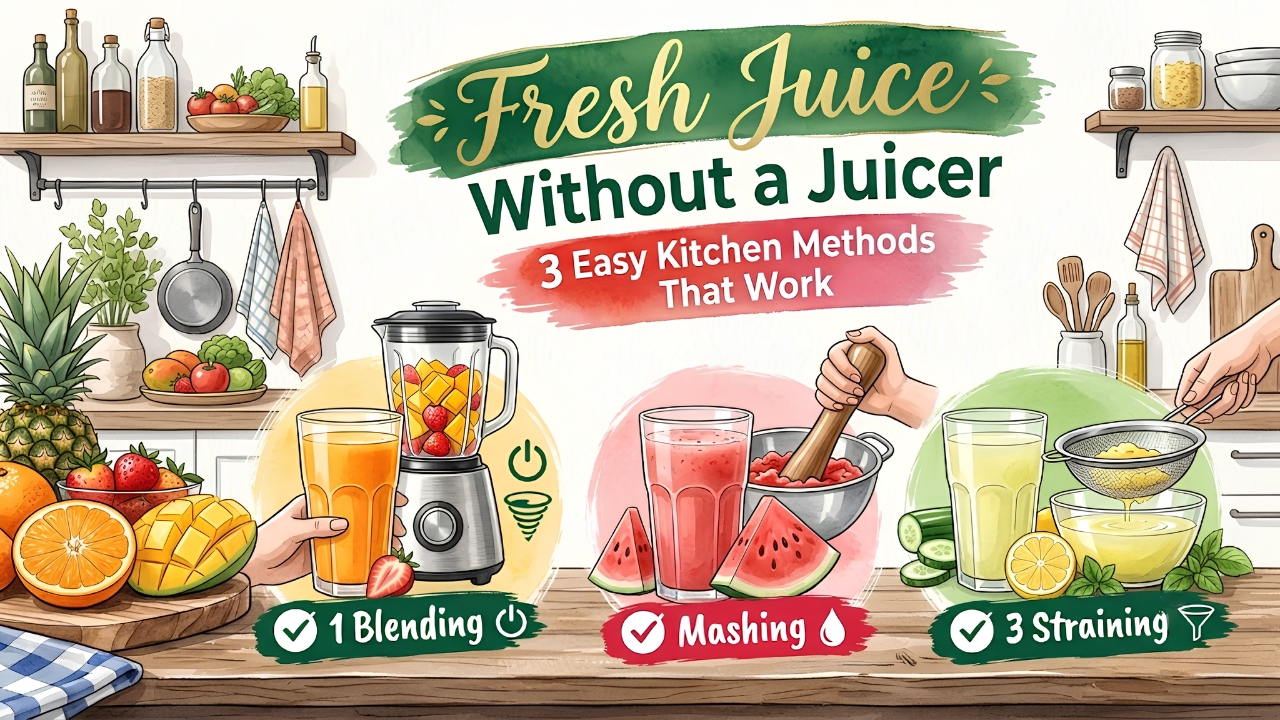
Fresh Juice Without a Juicer: Fresh juice is a refreshing way to enjoy fruits and vegetables, especially when you want something homemade without spending money on special kitchen equipment. But what if you do not own a juicer? The good news is that you can prepare delicious fresh juice using everyday kitchen tools you probably already have.
Whether you are craving orange juice in the morning, watermelon juice on a hot afternoon, or a refreshing glass of carrot juice, there are simple ways to get started. A blender, a grater, or even your hands can help you extract juice from different ingredients with minimal effort.
Making juice at home also gives you control over the ingredients. You can avoid added sugar, adjust the flavor to your liking, and experiment with different fruit combinations. Here are three easy methods for making fresh juice without a juicer, along with practical tips to help you get the best results.
1. Method One: Make Fresh Juice Using a Blender
A blender is one of the easiest alternatives to a juicer because it breaks fruits and vegetables into small pieces and helps release their liquid. This method works particularly well for watermelon, oranges, pineapple, strawberries, cucumber, and other ingredients with a relatively high water content.
What You Need
- 1–2 cups of your preferred fruit or vegetables
- A little drinking water, if needed
- A blender
- A fine-mesh strainer or clean muslin cloth
- A glass or jug
How to Prepare the Juice
Start by washing your ingredients thoroughly under running water. Peel fruits when necessary, remove seeds and hard pits, and cut everything into small pieces.
Place the prepared ingredients in your blender. If you are using fruits with plenty of juice, such as watermelon or oranges, you may not need much additional water. For firmer ingredients, such as carrots, add a small amount of drinking water to help the blender work smoothly.
Blend until the mixture becomes smooth. If you prefer juice without pulp, pour the mixture through a fine-mesh strainer or clean muslin cloth into a jug. Press gently with a spoon to release more liquid.
Serve immediately for the freshest taste. If you prefer a thicker drink, skip straining and enjoy the blended mixture instead.
Best Ingredients for This Method
Watermelon, pineapple, cucumber, oranges, apples, and strawberries are good options. You can also combine cucumber with mint or pineapple with a little ginger for extra flavor.
One useful tip is to avoid adding too much water at the beginning. Start with a small amount and add more only if necessary. This helps preserve the natural flavor of your fruit.

2. Method Two: Use a Grater and Strainer
Do you have a kitchen grater but no blender? You can still make fresh juice using a simple grating method. This technique is particularly useful for carrots, apples, cucumbers, and other firm fruits and vegetables.
What You Need
- Fresh fruit or vegetables
- A clean kitchen grater
- A bowl
- A fine-mesh strainer or clean muslin cloth
- A spoon
How to Prepare the Juice
Wash the ingredients carefully and peel them if needed. Remove any hard seeds, stems, or inedible parts before starting.
Using the fine side of your grater, grate the fruit or vegetable into a clean bowl. Smaller pieces make it easier to release the juice.
Once everything is grated, transfer the mixture into a clean muslin cloth or place it in a fine-mesh strainer. Squeeze the mixture gently over a second bowl to collect the liquid. Continue until most of the juice has been extracted.
Pour the collected juice into a glass and enjoy it fresh. You can add a little lemon juice or a few mint leaves if you want a brighter flavor.
Which Fruits and Vegetables Work Best?
Carrots, apples, cucumbers, and firm pears are suitable choices. This method may take slightly longer than blending, but it requires very little equipment.
Keep in mind that the amount of juice you obtain depends on the ingredient’s water content and freshness. Softer fruits may become messy when grated, so the grater method is generally more convenient for firmer produce.
Do not throw away the leftover pulp automatically. Depending on the ingredient, you may be able to use it in soups, pancake batter, muffins, or other recipes.
3. Method Three: Squeeze Juice by Hand
Hand-squeezing is probably the simplest method of all. It works especially well for citrus fruits, including lemons, limes, and oranges. You do not need electricity, a blender, or a complicated setup.
What You Need
- Fresh oranges, lemons, or limes
- A clean bowl or glass
- A knife
- A spoon or small strainer, if desired
How to Prepare the Juice
First, wash the fruit and roll it gently across your kitchen counter using the palm of your hand. Apply light pressure as you roll. This helps loosen the internal juice sacs and makes squeezing easier.

Cut the fruit in half across its middle. Hold one half over a clean bowl and squeeze firmly to release the juice. Rotate the fruit while squeezing to extract as much liquid as possible.
For oranges, you can also press a spoon into the exposed flesh and twist it gently to help release more juice. If you dislike seeds or pulp, strain the collected liquid before serving.
For lemons and limes, the juice can be mixed with drinking water for a refreshing beverage. If you prefer orange juice, simply squeeze several ripe oranges and enjoy the natural sweetness without adding sugar.
Tips for Getting More Juice
Choose fruits that feel heavy for their size, as they may contain more juice. Let refrigerated citrus fruits reach room temperature before squeezing, or warm them slightly in lukewarm water. Avoid using hot water, which can affect the fruit’s freshness.
Hand-squeezing is convenient for small quantities, although it may require more effort when preparing juice for several people.
4. Tips for Making Better-Tasting Homemade Juice
A few simple habits can improve both the flavor and quality of your homemade juice.
Choose fresh, ripe produce because it generally provides better flavor. Wash fruits and vegetables thoroughly before cutting or peeling them, and use clean utensils, bowls, strainers, and cloths.
Experiment with combinations that balance sweetness and freshness. For example, watermelon and mint create a refreshing drink, while orange and carrot offer a naturally sweet flavor. Cucumber and lemon make a light, citrusy combination.
Avoid adding sugar unless necessary. If your juice tastes too strong, dilute it with drinking water rather than adding sweeteners. Remember that fruit juice can contain substantial natural sugar, even when no sugar is added.
Whenever possible, drink homemade juice soon after preparation. If you need to store it, refrigerate it promptly in a clean, covered container and consume it as soon as practical. Fresh homemade juice is not pasteurized, so refrigeration does not eliminate all food safety risks.
5. Is Homemade Juice Healthier Than Store-Bought Juice?
Homemade juice allows you to choose the ingredients and control whether you add sugar or other sweeteners. You can also prepare smaller portions and experiment with seasonal produce.
However, homemade juice is not automatically healthier in every situation. Straining removes much of the fruit’s fiber, while blending and keeping the pulp retains more of it. Whole fruits generally provide more fiber and may be more filling than juice.
Packaged juices vary considerably. Some contain added sugar, while others are made entirely from fruit. Checking the ingredient list and nutrition label can help you compare products more accurately.
For everyday nutrition, consider eating whole fruits regularly and treating juice as one part of a varied diet rather than a replacement for all your fruit and vegetable servings.
6. Final Thoughts
Making fresh juice without a juicer is easier than you might expect. A blender is ideal for preparing a variety of fruit juices, a grater works well for firm produce, and hand-squeezing is perfect for citrus fruits.
The best method depends on the ingredients you have, the texture you prefer, and the amount of time you want to spend in the kitchen. Start with a simple recipe, use fresh produce, and adjust the flavors to suit your taste.
You do not need expensive equipment to enjoy a refreshing homemade drink. With a few everyday kitchen tools and a little creativity, you can prepare fresh juice whenever you like.
Disclaimer
This article is intended for general informational and educational purposes only and should not be considered medical or nutritional advice. Homemade juice can contain natural sugars and may have less fiber than whole fruit, particularly when strained. Wash produce thoroughly, use clean equipment, and refrigerate freshly prepared juice promptly. People with specific dietary requirements or medical conditions should consult a qualified healthcare professional for personalized dietary guidance.
