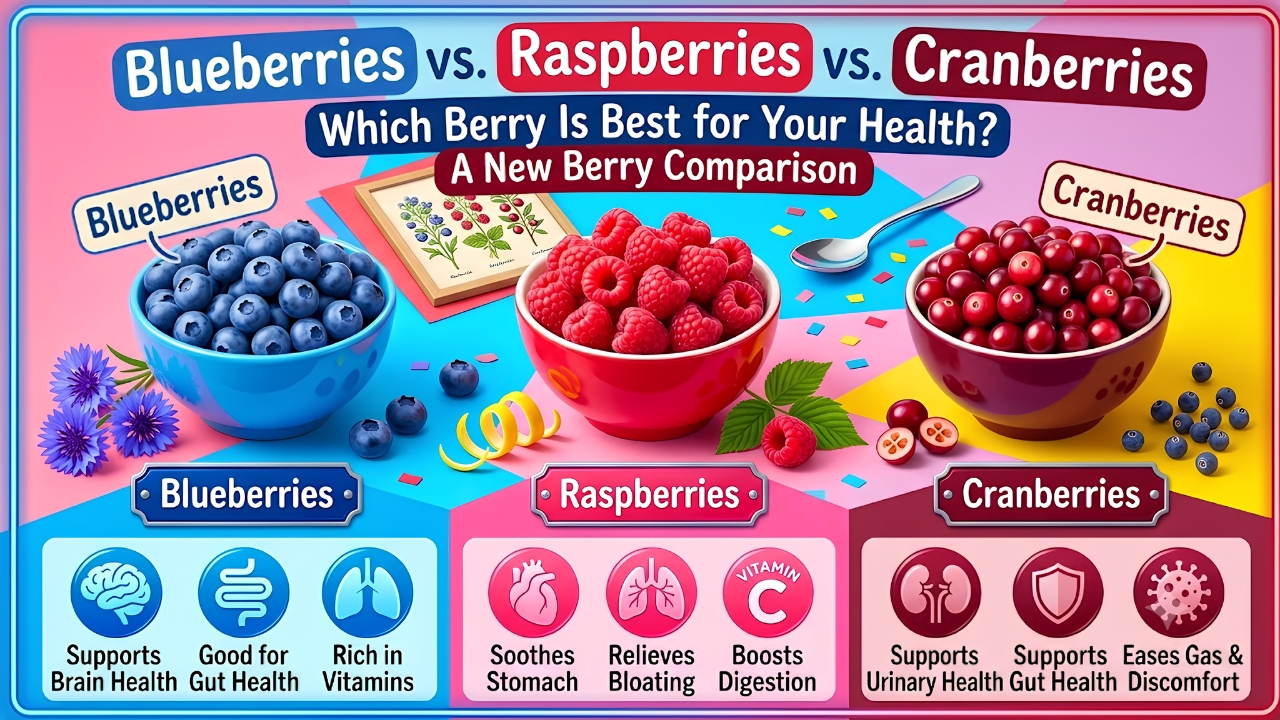
Blueberries vs. Raspberries vs. Cranberries: Berries are small, colorful fruits that can add flavor, variety, and valuable nutrients to your daily diet. Blueberries, raspberries, and cranberries are especially popular because they contain fiber, vitamins, and plant compounds that support overall health. Although these berries may look similar in size, their nutritional profiles, flavors, and common uses differ in several ways.
Blueberries are known for their deep blue color and mild sweetness, raspberries offer a sweet-tart flavor with plenty of fiber, and cranberries have a distinctly sharp taste. Each berry can be part of a balanced diet, but the best choice depends on your nutritional goals and personal preferences. Let’s compare their health benefits, nutritional differences, and practical ways to enjoy them.
Nutritional Differences Between Blueberries, Raspberries, and Cranberries
All three berries provide essential nutrients, but their calorie, carbohydrate, and fiber content varies. The following comparison uses approximate values for 100 grams of raw fruit. Cranberry values can vary depending on the variety and preparation.
Blueberries generally provide around 57 calories, 14.5 grams of carbohydrates, 2.4 grams of fiber, and 9.7 grams of naturally occurring sugar per 100 grams. They also contain vitamin C, vitamin K, and manganese.
Raspberries contain approximately 52 calories, 11.9 grams of carbohydrates, 6.5 grams of fiber, and 4.4 grams of natural sugar per 100 grams. Their particularly high fiber content makes them a useful option for people looking to increase their daily fiber intake.
Raw cranberries provide approximately 46 calories, 12.2 grams of carbohydrates, 4.6 grams of fiber, and 4 grams of natural sugar per 100 grams. They also supply vitamin C and several beneficial plant compounds.
These figures are estimates, and nutritional values may vary according to the fruit’s variety, ripeness, and growing conditions. Sweetened dried cranberries and cranberry juice have different nutritional profiles from fresh whole cranberries, particularly when added sugar is involved.
Health Benefits of Blueberries
Blueberries are rich in anthocyanins, the plant pigments responsible for their blue-purple color. These compounds belong to a broader group of antioxidants called flavonoids, which are studied for their role in protecting cells from oxidative stress.
May Support Brain Health
Blueberries have attracted attention in nutrition research because of their potential relationship with cognitive health. Some studies suggest that eating blueberries regularly may support certain aspects of memory and cognitive performance, although results vary and more research is needed to establish long-term effects.

Supports Heart Health
Blueberries contain fiber and plant compounds that may contribute to cardiovascular health as part of a balanced diet. Research on berry consumption suggests possible benefits for some heart-health markers, but blueberries alone cannot prevent or treat heart disease.
Provides Essential Vitamins
Blueberries supply vitamin C, which supports normal immune function and collagen production. They also provide vitamin K, which plays a role in normal blood clotting and bone health.
Fresh blueberries make a convenient snack and can be added to oatmeal, yogurt, smoothies, or fruit salads.
Health Benefits of Raspberries
Raspberries stand out because of their high fiber content relative to their calorie count. Their combination of fiber, vitamin C, and colorful plant compounds makes them a nutritious addition to everyday meals.
Promotes Digestive Health
Fiber helps support regular bowel movements and contributes to healthy digestive function. Because raspberries contain more fiber per 100 grams than blueberries, they are an excellent choice for people who want to increase fiber intake through whole foods.
Increase fiber gradually and drink enough water to help your digestive system adjust, especially if your current diet is low in fiber.
Supports Healthy Skin
Raspberries provide vitamin C, which the body uses to produce collagen. Collagen helps maintain the structure of skin, blood vessels, and connective tissues. Eating raspberries can contribute to vitamin C intake, although no single food can guarantee clear or youthful-looking skin.
May Help With Blood Sugar Management
The fiber in raspberries can slow digestion and help moderate how quickly carbohydrates are absorbed. Whole raspberries are relatively low in natural sugar compared with many other fruits, making them a useful option for people who are mindful of their carbohydrate intake.
However, individual blood sugar responses differ, and people with diabetes should consider overall portion sizes and their complete meal rather than relying on one fruit alone.

Health Benefits of Cranberries
Cranberries have a distinctive tart flavor and are especially known for research into urinary tract health. They contain proanthocyanidins and other plant compounds that may offer benefits beyond their nutritional value.
May Help Reduce Recurrent Urinary Tract Infections
Certain cranberry products may help reduce the risk of recurrent urinary tract infections in some people. Research suggests that specific compounds in cranberries may make it harder for certain bacteria to attach to the lining of the urinary tract.
However, cranberry products do not reliably treat an existing urinary tract infection. Anyone experiencing symptoms such as painful urination, fever, or back pain should seek appropriate medical care rather than relying on cranberry juice.
Contains Antioxidant Compounds
Cranberries provide several plant compounds, including flavonoids and phenolic acids. These substances are being studied for their potential roles in supporting overall health, although more research is needed to confirm many specific benefits.
Offers Vitamin C
Fresh cranberries contain vitamin C, which contributes to normal immune function and helps the body absorb iron from plant-based foods. Their tart flavor means that many commercially available cranberry products contain added sugar, so checking nutrition labels is important.
Which Berry Is Best for Weight Management?
All three berries can fit into a balanced weight-management plan. Blueberries are easy to add to breakfast, raspberries provide the most fiber per 100 grams among these three options, and fresh cranberries offer variety with relatively little natural sugar.
Fiber can help meals feel more satisfying, but weight management depends on overall eating habits, physical activity, sleep, and other individual factors.
For a filling snack, combine berries with plain yogurt, oats, or a small serving of nuts. These combinations provide additional protein, fiber, or healthy fats and may help keep you satisfied longer than eating a small amount of fruit alone.
How to Include These Berries in Your Daily Diet
You do not need to choose only one berry to benefit from their nutrients. Eating different fruits throughout the week helps add variety to your diet.

Add blueberries to oatmeal, smoothies, or unsweetened yogurt. Mix raspberries into fruit bowls or use them as a topping for whole-grain pancakes. Fresh cranberries can be cooked into a homemade sauce with little or no added sugar, blended into recipes, or mixed with sweeter fruits to balance their tartness.
Frozen berries are also a convenient option. They can retain much of their nutritional value and are often available throughout the year. Choose unsweetened frozen fruit whenever possible.
Final Verdict: Blueberries vs. Raspberries vs. Cranberries
There is no single berry that is best for everyone. Blueberries are an excellent source of anthocyanins and provide nutrients associated with general health. Raspberries are particularly useful for increasing fiber intake while keeping calories relatively low. Cranberries are notable for their potential role in reducing recurrent urinary tract infections when suitable cranberry products are used.
The smartest choice is to include a variety of whole berries in your diet according to your taste, budget, and nutritional needs. Fresh or frozen berries, eaten regularly as part of a balanced diet, can help make healthy eating both enjoyable and sustainable.
Disclaimer
This article is intended for general informational and educational purposes only and should not be considered medical advice. The health benefits of berries can vary depending on individual circumstances, portion sizes, and the products consumed. Cranberry products are not a substitute for medical treatment for urinary tract infections. If you have a medical condition, take medication, or need personalized nutrition guidance, consult a qualified healthcare professional.
